is “chai” a TYPE of tea??! bc in Hindi/Urdu, the word chai just means tea
its like spicy cinnamon tea instead of bland gross black tea
I think the chai that me and all other Muslims that I know drink is just black tea
i mean i always thought chai was just another word for tea?? in russian chai is tea
why don’t white people just say tea
do they mean it’s that spicy cinnamon tea
why don’t they just call it “spicy cinnamon tea”
the spicy cinnamon one is actually masala chai specifically so like
there’s literally no reason to just say chai or chai
They don’t know better. To them “chai tea” IS that specific kind of like, creamy cinnamony tea. They think “chai” is an adjective describing “tea”.
What English sometimes does when it encounters words in other languages that it already has a word for is to use that word to refer to a specific type of that thing. It’s like distinguishing between what English speakers consider the prototype of the word in English from what we consider non-prototypical.
(Sidenote: prototype theory means that people think of the most prototypical instances of a thing before they think of weirder types. For example: list four kinds of birds to yourself right now. You probably started with local songbirds, which for me is robins, blue birds, cardinals, starlings. If I had you list three more, you might say pigeons or eagles or falcons. It would probably take you a while to get to penguins and emus and ducks, even though those are all birds too. A duck or a penguin, however, is not a prototypical bird.)
“Chai” means tea in Hindi-Urdu, but “chai tea” in English means “tea prepared like masala chai” because it’s useful to have a word to distinguish “the kind of tea we make here” from “the kind of tea they make somewhere else”.
“Naan” may mean bread, but “naan bread” means specifically “bread prepared like this” because it’s useful to have a word to distinguish between “bread made how we make it” and “bread how other people make it”.
We also sometimes say “liege lord” when talking about feudal homage, even though “liege” is just “lord” in French, or “flower blossom” to describe the part of the flower that opens, even though when “flower” was borrowed from French it meant the same thing as blossom.
We also do this with place names: “brea” means tar in Spanish, but when we came across a place where Spanish-speakers were like “there’s tar here”, we took that and said “Okay, here’s the La Brea tar pits”.
Or “Sahara”. Sahara already meant “giant desert,” but we call it the Sahara desert to distinguish it from other giant deserts, like the Gobi desert (Gobi also means desert btw).
Languages tend to use a lot of repetition to make sure that things are clear. English says “John walks”, and the -s on walks means “one person is doing this” even though we know “John” is one person. Spanish puts tense markers on every instance of a verb in a sentence, even when it’s abundantly clear that they all have the same tense (”ayer [yo] caminé por el parque y jugué tenis” even though “ayer” means yesterday and “yo” means I and the -é means “I in the past”). English apparently also likes to use semantic repetition, so that people know that “chai” is a type of tea and “naan” is a type of bread and “Sahara” is a desert. (I could also totally see someone labeling something, for instance, pan dulce sweetbread, even though “pan dulce” means “sweet bread”.)
Also, specifically with the chai/tea thing, many languages either use the Malay root and end up with a word that sounds like “tea” (like té in Spanish), or they use the Mandarin root and end up with a word that sounds like “chai” (like cha in Portuguese).
So, can we all stop making fun of this now?
Okay and I’m totally going to jump in here about tea because it’s cool. Ever wonder why some languages call tea “chai” or “cha” and others call it “tea” or “the”?
It literally all depends on which parts of China (or, more specifically, what Chinese) those cultures got their tea from, and who in turn they sold their tea to.
The Portuguese imported tea from the Southern provinces through Macau, so they called tea “cha” because in Cantonese it’s “cha”. The Dutch got tea from Fujian, where Min Chinese was more heavily spoken so it’s “thee” coming from “te”. And because the Dutch sold tea to so much of Europe, that proliferated the “te” pronunciation to France (”the”), English (”tea”) etc, even though the vast majority of Chinese people speak dialects that pronounce it “cha” (by which I mean Mandarin and Cantonese which accounts for a lot of the people who speak Chinese even though they aren’t the only dialects).
And “chai”/”chay” comes from the Persian pronunciation who got it from the Northern Chinese who then brought it all over Central Asia and became chai.
Not to mention leaving open thighs and arms in critical areas with no armour.
Sure just go sword fight people with arteries available for them to stab it’s fine. So long as men get to see you’re women and you’re sexy it’s fine.
The only reason I can see to leave your legs exposed like that is to air out the privates since that island is probably hot af. I’d probably go around wearing a dress and sandals all day if I was told I couldn’t be naked.
Aren’t the Amazons based in Greek mythology? If so, weren’t there gladiatorial fights where women could be naked too? If so, technically they could all just be fighting naked. It’s only training and they’re friends/comrades in arms.
I do have a beef with them high heeled boots though. Fairly sure the didn’t have those in Greek times. So inaccurate.
(If anything and everything I’ve typed here is untrue, feel free to correct me politely or with funny af gifs XD)
OMG I’m a classicist this is my JAM
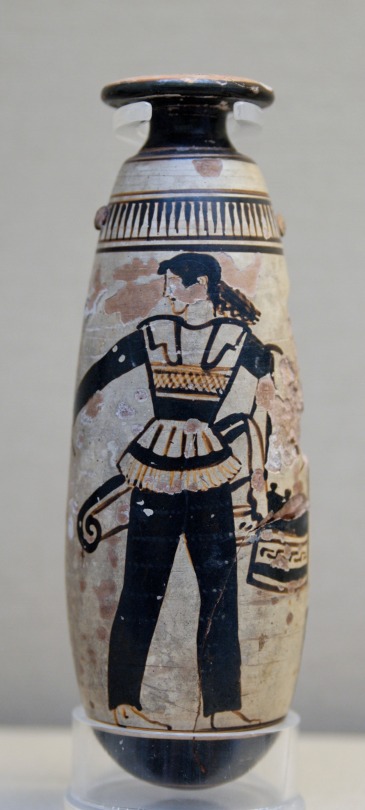
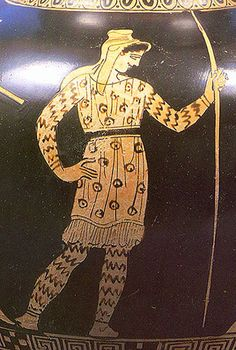
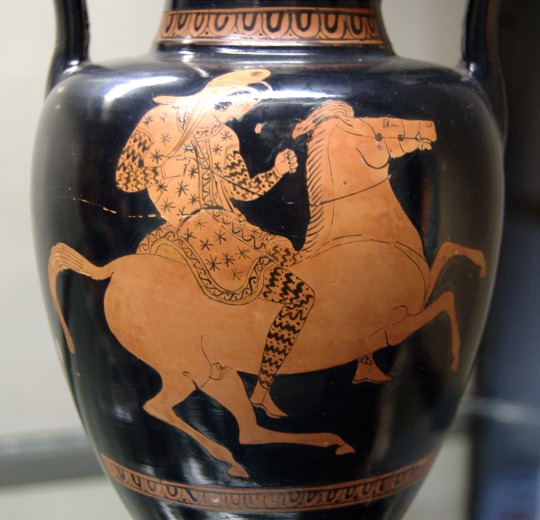
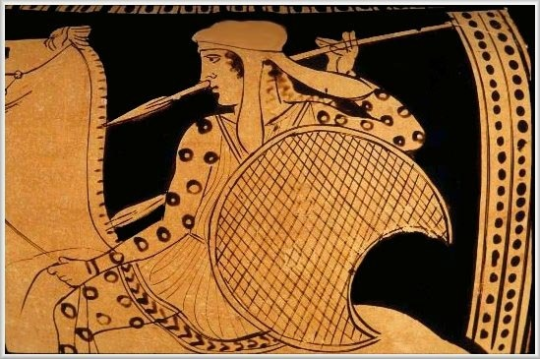
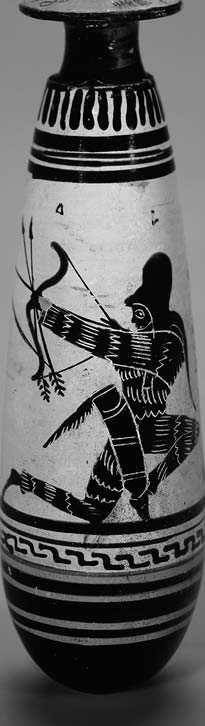
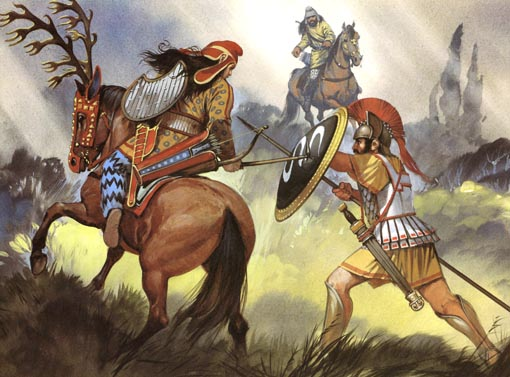
You aren’t the wrongest. (You are the rightest about the high-heeled boots. Those are a nope in terms of practicality and historicity). The Amazons were a semi-mythic group of warrior women who hailed from Thrace and/or Scythia (basically, “North-east ish”). Whether there actually were warrior women from that area is debatable. Greek depictions of Amazons varies quite a bit. In early art, they were depicted as female versions of Greek hoplites, with the same costume- think tunic-y thing with very short skirt, torso armor (but not with boob cups, and definitely covering the shoulders because how the hell else it it gonna stay up), greaves, helmets, big-ass shields, and knifesticks spears.Over time, elements of Thracian and Scythian costume made their way into depictions of Amazons- things like bows and javelins, a fuckton of horses, patterned tunics, boots, pointy hats, and stripey pants. And maybe tattoos (It’s kinda hard to tell if some craftsmen were trying to depict sleeves and sucked at it, or were genuinely trying to draw people with ink in their skin). The most common depiction of Amazons was as an archer on horseback, with a recurve bow, wearing long-sleeved tunic, belt, furry hat, trousers, and boots. Optional but popular is a half-moon shield.
This one’s pants are boring, but you can see her quiver kinda behind her:
This one clearly shows the hat, pants, tunic, and sassy attitude:
On a horse, bomb-ass christmas tunic, fancy pants fancier than any fancy pants you will ever wear:
horse, half-moon shield, aerial knifestick javelin, complete lack of fucks:
pants and/or furry onesie, big hat, recurve bow, ancient speed-shooting techniques only recently rediscovered:
As for nudity, Amazons were rarely depicted naked (except for the odd stray boob) until the Hellenistic era (300′s BC), and on into the Roman Era, especially during it’s midlife crisis phase (the century surrounding 0 AD, roughly) and it’s post-midlife-crisis have-sex-with-everyone, kill-all-your-neighbor’s-chickens-and-eat-them-deep-fat-fried-all-at-once, act-surprised-when-you-contract-500-venereal-diseases-and-clog-your-arteries phase (Nero-ish onwards-ish. And yes, that is definitely the actual term used to refer to that period of Rome’s history, and not simply a sweeping generalization).
Gladiators were purely a Roman thing. You do get arenas and gladiators in Greece and Turkey and whatnot, but that’s only because the Romans invaded and put them there because bloodsport made them less homesick or something, I guess. Female gladiators were certainly a thing, and may have fought naked for entertainment value (TBH I’m too lazy to go look it up at the moment), but the thing is, gladiatorialism was a sport, just like modern taekwondo, judo, and fencing are sports. Yeah, people are going to get injured, but they didn’t die nearly as often as our modern popular image would have you think, and their fighting style wouldn’t really be all that useful on a battlefield, because they had rules to follow and their purpose was NOT to kill their opponent, but rather to provide an entertaining fight. Gladiators actually considered it a point of pride to never kill an opponent in the arena.
Back to pants, because pants are interesting. To the Greeks and Romans, pants were just about the weirdest fucking thing they’d ever seen. Literally all of their clothes consisted of drapey rectangles. If they were feeling fancy, they’d stick a belt or a nice brooch on it. Pants are a complicated, relatively form-fitting garment and it just freaked those poor Greeks right out. Pants were a visual signal for “really fucking foreign”. The furry-hat-and-pants depiction I mentioned above was also the exact same costume that male Scythian warriors were depicted in, and the androgyny also freaked out the poor androcentric Greeks. Often, in vase art and such, the only way to tell an Amazon from a male Scythian is that the women have white skin. They lack of visible gender differences screamed “foreign” to the Greeks. There are several mythic stories about the origins of pants, and they all attribute their invention to women. One story even has Medea (of “fuck you Jason, I’m going to murder our kids to get back at you you utter fuckpile” fame) inventing pants.
Historically speaking, pants were invented because people found themselves needing to ride horses to get places, and not-pants are really inconvenient for that. Since both men and women rode horses, both men and women wore pants. (There’s also a fair bit of merit to the theory that the Amazon legend comes from actual Scythian female horse-archers, since once you put a person on a horse and give them a recurve bow, upper body strength advantages don’t mean shit). Pants were actually a key bit of military technology. Ancient China was having a hell of a time fighting off all these pants-wearing horse nomads (this was like 300-200 AD-ish) until the state of Qin finally decided to collectively put on pants and get on horses. They then preceded to kick the nomad’s pants-wearing asses and unify the warring states of China. Because pants.
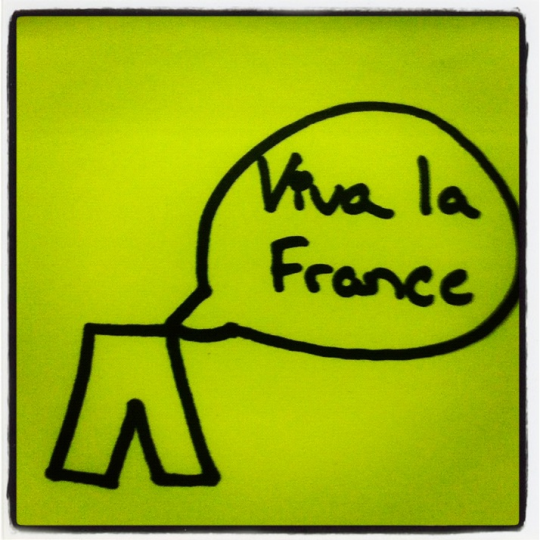
Of course, because of bullshit, pants came to symbolize femininity and barbarianism to the Greeks and Romans. They think you look very silly in your uncivilized female legsleeves. Funny sidenote, the Romans avoided pants whenever they could, but when they kept invading more northerly places, shit kept getting colder. Winters in Northern Gaul (modern day France) were cold enough that soldiers actually had to put on pants, and the Romans thought this was significant enough that they called the region “Gallia Bracata”, which translates to “Trousered Gaul”, or, if you’re slightly more imaginative, “Pants France”.
(This is just the first image that came up when I googled “pants france”)
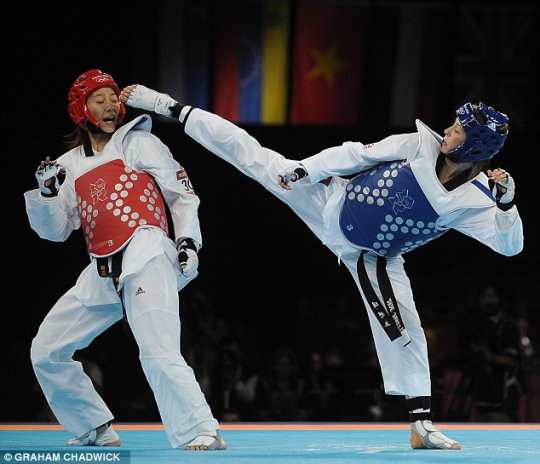
So, to bring this all back around to Wonder Woman, I’m really not a fan of those costumes. They aren’t practical and they aren’t accurate, and they’re also cliche and just like every other sexy STRONG female warrior in fantasy media (I will direct you to @bikiniarmorbattledamage for more details and feminist rants). They could have kept the definitely necessary to show thigh skin by dressing them as Greek hoplites, but then they’d have had to give them helmets and cover their precious hair, and give them actual for reals breastplates that protect above the breasts (seriously collarbones aren’t made of steel and PROTECT YOUR SHOULDERS did you see what happened to poor Bucky), and aren’t molded to the torso (seriously- if it’s stiff enough that you can’t stab through it, it’s stiff enough that you can’t move in something that tight). And even if it is only training, and for some reason they’re not hitting anywhere that’s exposed (maybe training to hit only really small target areas? IDK), the armor depicted wouldn’t work- there’s clearly no cushioning under it, and armor (any kind, really, plate, mail, scale, all of it) really doesn’t work unless you’ve got a layer of padding beneath it. Modern combat sports with limited target areas don’t have form-fitting breast-cupping gear, they have thick pads that protect. For instance, two women competing in Taekwondo:
Not at all coincidentally, here’s some modern body armor worn by female soldiers:
Incidentally, the Scythians also had similar armor, made of scales, woven leather, or some form of lamellar.
Anyway, the movie makers could have their characters showing a bit of thigh (if it’s that important that they be sexy somehow) and maintain some sense of accuracy with thick torso armor, which at least protects the vitals, If they wanted to really get back to the idea of Amazons as terrifying warrior women who act as equals to men and fight as equals to men, and keep the Ancient Cultures motif, these ladies would be wearing stripey pants and furry hats.
Basically, I think it would be awesome to put Wonder Woman in stripey pants.
Alrighty, so I just spent an hour looking up stuff about ancient pants. You don’t have to dislike DC’s costumes just because I do, though- they’re just not very accurate to either ancient Greek culture, or to ancient Greek depictions of Amazons. And there’s no pants.
TBH now I kinda want to redesign Wonder Woman to be a Scythian Amazon. Lemme know if you want me to tag you or whatever if I end up posting a drawing of Wonder Woman in stripey pants.
I could probably hit up ye olde googleheim for this but I wonder how they chose the order for LGBTQIA like … what type of alphabet
have you seen the white gays reorganize it to have the G first lmao
no but not like it would change anything anyway that’s basically how it is
This is something I know a lot about, so pardon me for this…
Prior to the Stonewall Riots, even activist groups tended to default toward some variation of the word “homosexual” in their titles. Until the slang term “gay” began to catch on in the 60s.
So in the 70s, it was simply the “gay liberation movement” – at a time “gay” (sort of) functioned as a catchall for all sexual and gender minorities. It was thought of as an umbrella term, even if it wasn’t.
As time passed, because lesbians felt that they were (and they actually were) excluded in many cases from the movement, “gay and lesbian” became commonplace throughout the 80s and into the 90s.
“Gay and lesbian” is still on the founding documents of many organizations that sprang up in the post-AIDS-crisis era of Human Rights Campaign-style activism that was primarily concerned with visibility politics and increasingly focused on the concerns of white, middle-to-upper class assimilationist queers (the “we’re your doctor, your lawyer, your neighbor, your cousin, and we’re just like you” crowd). Examples:
GLAAD (Gay and lesbian anti-defamation league)
The Task Force (founded as National Gay Task Force, then the National Gay and Lesbian Task Force in 1985. They started going by just “The Task Force” in the early 2000s, before officially changing their name to National LGBTQ Task Force only in 2014)
But because of this assimilationist trend in the political movement and the style of activism with the most visibility, people who felt excluded began pushing back. Some advocated for better representation of bisexual and transgender people, hence GLBT began to get added to mission statements. Some, particularly nonwhite communities, rejected the terms altogether, proliferating terms like “Men who have sex with men”/MSM, and “same gender loving”/SGL or even the problematic “Down Low” (DL) into certain activist spaces. As GLBT became common in the late 90s, more groups started pushing for inclusion: Intersex (I), Asexuals (A), Questioning (Q), Queer (Q), Two Spirit (TS), etc.
Meanwhile, some folks thought we should avoid the alphabet soup altogether and run with Queer. An umbrella term that would also encompass things like polyamory, fetishism/kink, etc., without excluding anyone.
Groups coming into play around this time tried to avoid wading into the debate altogether, thus we have organizations like “Equal Rights Nevada” “Equality Utah” “Empire State Pride Agenda” “MassEquality” “Out & Equal” and “Pride at Work.”
It was in the early 2000s that feminist and lesbian leaders convinced people to switch from GLBT to LGBT. Queer never quite caught on for activist circles and organizations, in part because it was too broad, and sometimes you need a little more specificity in your mission statement… otherwise you run the risk of getting hijacked by cisgender, straight allies intent on pushing an oppression narrative about how they’re discriminated against for liking to get spanked. But, probably more importantly, a lot of people of an aging generation had extremely bad connotations around the word and weren’t interested in reclaiming it. Anyone over the current age of 45 or so probably grew up being bullied under the word queer. Queer was too controversial for risk-averse organizations depending on the fundraising support of older gay men and women.
So by the time I was in college (late 90s), GLB or GLBT was the default for most.
I remember the debate around changing GLBT to LGBT (or even TBLG) very well. I worked in the queer press at the time (2000-2005). It made a lot of people very mad. It still makes some people mad. But the idea was to emphasize that gay men were not primary. It was a feminist thing. Sadly, the argument for TBLG (which argued that we name them in order of most oppressed and/or least visible) never really caught on beyond a few academics and some hardcore activists.
We made the editorial decision in 2001 to officially switch to LGBT unless quoting someone or as part of a proper name (e.g. the title of an organization). So did many other papers. GLAAD pushed this standard into the mainstream press. It caught on.
Most groups/editorial boards/journalists/activists put their foot down around the lengthy alphabet soup stopping at 4 – although Q, I and A are sometimes added depending on the group. Whether A stands for asexual or ally and whether Q stands for queer or questioning all depends on the group in question.
As far as I can tell, LGBT is the settled default. I’m not aware of any concentrated political push to move on and change it now, at least not like there was in the late 90s and early 2000s. Although it could happen. I would welcome it. Language, and how we frame our movement, must evolve.
Sorry, I know I wasn’t asked, but I wanted to throw some history out there.
I’ve been trying to think of a good term for the “weepy movies about tragic queer people aimed at straight audiences” subgenre, and I think I’ve got it:
dead gays for the straight gaze
eh? eh??
queers die for the straight eye
SO YOOOO who wants to learn why this is a thing because the history is actually really fascinating and ties into some of my favorite shit ever?
Okay, so like, back in the mid-twentieth century, when being queer was still totally a crime everywhere in the United States, queer writers started working in pulp fiction–starting with Vin Packer (she is awesome)–and writing pulps to tell our stories.
So one day over lunch, her editor asks her, “Hey, Vin, what’s the story you most want to write?”
And she goes, “Well, I’d like to write a love story about lesbians because I’m, you know, gay.”
He says, “Hey, that’s awesome, I will publish it. One thing, though, the homosexuality has to end badly and the main character has to realize she was never gay in the first place. We can’t seem to support homosexuality. I don’t actually think that’s cool, but the government will literally seize our book shipments and destroy them on the basis of the books being ‘obscene’ if you don’t, so if we want this story actually out there, and not burning in a bonfire somewhere, it’s what you gotta do.”
So Vin goes home and writes Spring Fire, the book that launched the entire lesbian pulp genre. And while one character ends up in an insane asylum and the other ends up realizing she never loved her at all, it’s massively successful, and queer women everywhere snap it up and celebrate quietly in their closets across the nation because HOLY SHIT THERE’S A BOOK ABOUT ME? I’M NOT ALONE and it starts a huge new genre.
But: every publisher is subject to those same government censorship rules, so every story has to end unhappily for the queer characters, or else the book will never see the light of day. So, even though lesbian pulp helps solidify the queer civil rights movement, it’s having to do so subversively or else it’ll end up on the chopping block.
So blah blah blah, this goes on for about twentyyears, until finally in the seventies the censorship laws get relaxed, and people can actually start queer publishing houses! Yay! But the lesbian pulps, in the form they’d been known previously, basically start dying out.
MEANWHILE, OVER IN JAPAN! Yuri, or the “girls love” genre in manga, starts to emerge in the 1970s, and even starts dealing with trans characters in the stories. But, because of the same social mores that helped limit American lesbian pulp, the stories in Japan similarly must end in tragedy or else bad shit will go down for the authors and their books. Once more: tragic ends are the only way to see these stories published rather than destroyed.
The very first really successful yuri story has a younger, naive girl falling into a relationship with an older, more sophisticated girl, but the older girl ends up dying in the end, and subsequent artists/writers repeated the formula until it started getting subverted in the 1990s–again, twenty years later.
And to begin with cinema followed basically the same path as both lesbian pulps and yuri: when homosexuality is completely unacceptable in society, characters die or their stories otherwise end in tragedy, just to get the movies made, and a few come along to subvert that as things evolve.
But unlike the books and manga before them, even though queer people have become sightly more openly accepted, movies are stuck in a loop. See, pulps and yuri are considered pretty disposable, so they were allowed to evolve basically unfettered by concerns of being artistic or important enough to justify their existence, but film is considered art, and especially in snooty film critic circles, tragedy=art.
Since we, in the Western world, put films given Oscar nods on a pedestal, and Oscar nods go to critical darlings rather than boisterous blockbusters (the film equivalent of pulps, basically), and critics loooove their tragedy porn, filmmakers create queer stories that are tragic and ~beautiful~ that win awards that then inspire more queer stories that are tragic and ~beautiful~ until the market is oversaturated with this bullshit.
The Crying Game? Critical darling, tragic trans character.
Brokeback Mountain? Critical darling, tragic queer (? not totally sure if they’d consider themselves gay or bi, tbh?) characters.
And so on and so on VOILA, we now have a whole genre of tragedy porn for straight people, that started out as validation for us and sometimes even manages to slip some more through the cracks occasionally, but got co-opted by pretentious ~literary~ types. While tragic ends made these stories more acceptable to begin with, and in the mid-to-late nineties that started getting subverted a little bit (Chasing Amy, But I’m a Cheerleader), eventually that became the point, as more straight audiences started consuming these narratives and got all attached to the feels they got from the ~beauty of our pain~.
I realize most people on here are too young to remember the Bush years but when you guys frame your SJ posts as “you hate[x]!!! why do you hate [x]???” it sounds an awful lot like how Bush supporters would scream WHY DO YOU HATE AMERICA???? whenever anybody would criticize the president.
So that’s something to consider if you want to reach people over 25. Because most of us have an extremely negative conditioned response to that type of rhetoric.
Yeah.
There’s a surprisingly sharp generation gap on Tumblr–when I first got on the site in 2011 it was between high-school age and college age, but I don’t think it’s defined primarily by life stage or maturity level, because it’s tracked steadily upward ever since. Anecdotally, right now the split seems to be centered around age 23, plus or minus a couple of years on either side, which corresponds roughly to the birth years 1990-1994. My hypothesis for the generation gap boils down to “how old were you on September 11, 2001?” Those solidly on the older side of the gap were at least vaguely aware of a pre-9/11 political landscape, witnessed how disruptive the first term of the Bush administration was, and have a visceral reaction anything that smacks of neoconservatism or Religious Right propaganda. Those on the younger side attained political awareness in a world where the changes wrought by the Bush administration were the new normal, and their right-wing bogeyman uses Tea Party and GamerGate rhetoric.
So for the record, Bush-era “innovations” that unnerve the FUCK out of people on the older side of the generation gap:
– Casual acceptance of fear as an excuse for hatred and pre-emptive retaliation
– An “ends justify the means” approach to stamping out the slightest trace of vulnerability, no matter how repressive the means, or how slight or unlikely the potential harm
– “If you’re not marching in lockstep with us, you’re one of THEM, why do you hate all that’s good and noble?” / “Dissent and safeguards against the abuse of power just give aid and comfort to the enemy” / “Don’t you SEE that insisting that the protections of civil society apply to THOSE PEOPLE is just going to GET OUR PEOPLE HURT, YOU’RE HURTING PEOPLE YOU MONSTER”
– Anything that smacks of religious-fundamentalist logic or rhetoric
These things are not normal. These things are not how just societies are built. They are the hot water that an entire generation of lobsters has been raised to swim in without noticing. The undercurrents in the internet movement calling itself Social Justice that disturb the older generation are, essentially, the dirty tactics of the Bush administration and its unholy marriage of neocons and fundies–rebranded with a new set of acceptable targets, but with the tactics themselves unquestioned. Are they the younger generation’s fault? Fuck no. They’re what happens when the most culturally and politically powerful nation on Earth tries to pretend it’s moved on from the Bush years, but without ever having confronted the devastation those tactics left in their wake, dismantled the self-sustaining fear-and-repression machine, or held the perpetrators accountable for their officially-sanctioned torture, shredding of civil liberties, and thinly-justified wars of aggression.
So if I were to do the annoying geezer thing (at the ripe old age of 27) and Address The Youth, I guess what I’d say isn’t just that most people over 25 get an overwhelming urge to throw up in their mouths at the slightest sign you’re playing “but why do you hate freedom” Mad Libs. (Although that’s true.) It’s more than that. It’s that “why do you hate [x]???” belongs to an entire toolbox of fear/attack, ingroup/outgroup, and absolutist tactics that we’ve left lying out without bothering to re-affix the giant warning labels that they aren’t normal, or necessary, or even effective over the long term, however tempting they may be for a quick fix. And that it’s okay to refrain from using them.
The bad guys will not win if you ease off the attack a little and give your opponents room to tell you where they’re coming from. Opening yourself up to argument-counterargument with Bad, Unacceptable, Forbidden ideas is a form of vulnerability, but finding and evaluating the weak spots in your beliefs ultimately strengthens them and strengthens your ability to win people over to your side. Doubling down on the repeated assertions that you shouldn’t even have to argue and that disagreement is harmful or immoral is an alluring way to get what you want in the short term, but it produces superficial compliance out of fear rather than genuine agreement, and the backlash it causes is ultimately more dangerous than the vulnerability of opening yourself to disagreement. And it blinds you to the possibility that you may not be entirely in the right. This isn’t some MRA sneak attack to manipulate you into ceding ground. This is how discussion normally works in a functional society. You have been handed a dysfunctional, toxic system for exchanging ideas, in online SJ as well as in wider politics–and no, it’s not normal or effective, and no, you do not have to buy into that system’s claims that it’s the only thing standing between the innocent and an orgy of destruction and victimization.
The strangest thing about this is that I would not consider myself particularly old (does anyone?) but I was in my late teens on 9/11, and yeah. This is exactly what I find unnerving about the approach of some younger people to SJ issues. For a long time I just put it down to (im)maturity, but I’m really starting to think that there’s something fundamentally toxic and broken about the way our country has been approaching these things for the last 15 years or so. That kind of black and white, ‘if your fave is problematic then they’re basically the antichrist’ thinking that demonizes and squashes any kind of disagreement is really unhealthy, and it’s something that is learned.
Same, I’m 30, married to someone older than me, and we have a lot of friends in their 40s/50s. People I encounter on a regular basis comment on what a “baby” I am. I was 15 on 9/11. I’m not like. Ancient. But there is a definitely a difference between how people my age discuss issues versus how younger folks discuss them. Neons have really done a number on out ability to talk about stuff.
This would explain a lot about how fandom conversations have been going down recently. The absolute us/them nature of some of them, and the way SJ tools are used to bully people in order to win an argument.
I thought it was largely to do with Tumblr being a poor design for actual conversation, but this makes more sense, given the patterns I’ve seen.
I…think that most of the people on Tumblr will get older. The no holds barred, right or wrong, FUCK YOU surety is part of being a teenager. Then you get it knocked out of you and learn to nuance. Both phases have value. What I’m saying here is that I think it’s more developmental than generational.
I don’t understand what this has to do with 9/11
9/11 largely serves as a convenient symbolic marker for a severe shift in public discourse– I was 14 when it happened and I very clearly remember the before-times socially and politically and the after, when there really was a huge public shift in the way things were discussed, and how people in my age group and a little younger responded to things like “national tragedies,” “us vs them,” good vs evil" etc?
Kind of dumb example but I think is illustrative– when we were 12/13, the year before 9/11, a group of kids went to DC and New York and visited all the war memorials. People whose uncles and fathers had fought in Vietnam visited the wall and Arlington, were moved, went through all the ceremonial stuff, but not to the point of dramatic hysterics. Maybe two/three years after 9/11, many of the same kids went to Pearl Harbor while we were on tour in Hawaii and everything was prefaced with this really jingoistic Us Vs Them language, and half the group spent the entire time bawling performatively. There were also a lot of recriminations for not engaging in the theatrics, because it wasn’t showing Proper Respect to Our National Heroes, none of whom any of these kids could have known because they all died in 1941.
My little brother is only 22 months younger than me but he doesn’t really remember the day at all, and doesn’t really remember anything about the politics or big news stories from beforehand, whereas I very clearly remember having an opinion about the 1996 election and my The Talk with my mom was kicked off because of the Clinton impeachment. 9/11 kicked off a lot of the worst of what we see in American political discourse today, and so people who don’t remember it as clearly or the time before may have different outlooks, especially in the States.
On the one hand this is a fairly enlightening take on the somewhat rabid state of what passes for online discourse these days.
On t’other, remind me again why we haven’t built a wall around America yet?
This is a fascinating conversation. I think there’s more to it than this–the way digital social spaces intersect with social phenomena informs the discourse hugely–but there’s a lot here worth considering.
It also occurs to me that a lot of us who were old enough not only to remember 9/11, but also to be aware of the shift in public discourse around it, are also old enough to remember the Cold War, or at least its last lingering throes.
I’m 32, and I grew up with parents who were very active in the nuclear freeze movement. One of the fundamental truths I absorbed very early was that us-vs.-them absolutism and refusal to compromise and engage in good faith with ideological opponents wasn’t just stupid; it was deadly–potentially on a massive, global scale. I remember projects to hook U.S. kids up with penpals in the U.S.S.R. in hopes that we’d learn to see each other as people and so maybe not end life on fucking Earth if by some miracle our parents didn’t beat us to the punch.
And that approach was critical to the peace movement in general: humanizing the enemy. Trying to find points of connection; to learn to disagree humanely. That was a core, fundamental value of my childhood, in ways that were very closely and directly linked to the contemporary geopolitical scene; and they’re philosophies that continue to profoundly inform and steer my discourse and my approach to conflict–personal and political–as an adult.
Which is part of what scares the shit out of me about the discourse I see online, especially from the left: it’s all about radical dehumanization. I see people who are ostensibly on my side casually call other human beings trash or garbage or worthless. Scorch earth. Go to unbelievable lengths to justify NEVER engaging. Meet overtures to peace or steps toward change with spectacular cruelty.
I mean, I’ve seen variations on this exchange more times than I can count:
“[group x] are people, too.”
“No, they’re not.”
And then people LOL, and I don’t even know where to start, because–No. You do not say that. You do not EVER say that. EVER.
And I can so easily imagine how terrifying it must be to grow up in that–to be 15 or 16 or 17 and just becoming, and trying to find and place and grow into yourself in that kind of violence, and–
–to paraphrase someone profoundly and complexly flawed and still a person worth paraphrasing: Remember, babies, you gotta be kind.
I… jesus god, that explains a lot.
I was born in 1992, but my dad has always been a loud and engaged Democrat. He’s frankly awful, but the thing I disagree with him the least on is politics. So while I was only 9 on 9/11 (and I clearly remember trying to convince people on the playground that no, they didn’t hit the White House, no there weren’t any bombs, it was planes– I’ve always been obnoxious about correcting people, even when I didn’t really know any better than they did and the fact that I was right was chance), I knew academically that this stuff was happening and these changes were going on because I read every political cartoon that passed through the house and Dad would happily hold court and/or show us tons of political videos; he hated Bush’s guts to the point that we had an “IMPEACH THE SHRUB” sign on our house for a while. But, well, I was nine on 9/11, and never really saw the political climate before that, especially because my house never had TV since I was about seven. So on a gut level I never got to know the old normal, and it didn’t quite click. But when you spell it out like that… yeah, I absolutely buy it.
if you ever think history isn’t an important subject just remember that my friend’s solution to poverty was to “just print more money”
Well isn’t it?
tell that to the weimar republic
[horrified german screaming in the distance]
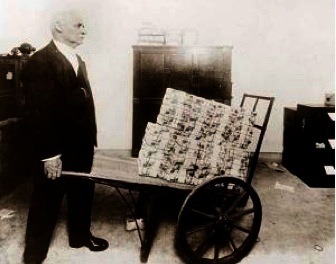
Ok so many people may not know what this is about. After World War I in Germany the country was pretty much bankrupt and on top of that they were being forced by the allies to pay restitution for the war. In order to try to fix these problems the Weimar Republic which was the government that took over after the war decided to just print more money. Because of this the country faced hyperinflation which basically means that everything became majorly expensive and the money was pretty much worthless. This is a picture of a man that is literally carrying money around in a wheelbarrow because that is how much money it took to pay for things:
These are some children playing with stacks of money because they were cheaper than toys:
And here is another:
So in short no you cannot fix poverty by printing more money.
I used to think that was a solution so I’d like to thank this post for explaining it to me







 Aw Yiss