Y’know an awful lot of Terry Pratchett’s books are concerned with how powerful women are when they get angry and how important anger is as a driving force to defend what is right and to tackle injustice.
A lot of his most interesting and most deeply moral characters are angry ones. Granny Weatherwax, Sam Vimes, Tiffany Aching. All are to a large extent driven to do good by anger.
And that honestly means a lot to me.
Terry was an angry man. This is not the same as saying he was a bad man. He held a righteous fury, the kind that comes from looking at the world, and knowing just how much better it could be if only we stopped being bastards. He held a genuine belief that people can and do change the world for the better, not by big things, but by the little. He believed in the kindness of others, and that kindness means more than wishing well and prayers. He knew the difference between being good and doing good, and that you technically couldn’t be the first without the latter.
He was angry at the world because he loved it, and he wanted us to feel the same, to not feel helpless, to know that something can be done, to know that anger is not just the tool of abusers and tyrants but the chisel by which The People might chip away at oppression and fear and bring it crumbling down. He gave us the drive needed to believe in hope. because he wanted to make the world better with words and not violence.
It is said that, during the fantasy book in the late eighties, publishers would maybe get a box containing two or three runic alphabets, four maps of the major areas covered by the sweep of the narrative, a pronunciation guide to the names of the main characters and, at the bottom of the box, the manuscript. Please… there is no need to go that far.
There is a term that readers have been known to apply to fantasy that is sometimes an unquestioning echo of better work gone before, with a static society, conveniently ugly ‘bad’ races, magic that works like electricity and horses that work like cars. It’s EFP, or Extruded Fantasy Product. It can be recognized by the fact that you can’t tell it apart form all the other EFP.
Do not write it, and try not to read it. Read widely outside the genre. Read about the Old West (a fantasy in itself) or Georgian London or how Nelson’s navy was victualled or the history of alchemy or clock-making or the mail coach system. Read with the mindset of a carpenter looking at trees.
Apply logic in places where it wasn’t intended to exist. If assured that the Queen of the Fairies has a necklace made of broken promises, ask yourself what it looks like. If there is magic, where does it come from? Why isn’t everyone using it? What rules will you have to give it to allow some tension in your story? How does society operate? Where does the food come from? You need to know how your world works.
I can’t stress that last point enough. Fantasy works best when you take it seriously (it can also become a lot funnier, but that’s another story). Taking it seriously means that there must be rules. If anything can happen, then there is no real suspense. You are allowed to make pigs fly, but you must take into account the depredations on the local bird life and the need for people in heavily over-flown areas to carry stout umbrellas at all times. Joking aside, that sort of thinking is the motor that has kept the Discworld series moving for twenty-two years.
“Notes from a Successful Fantasy Author: Keep It Real” (2007), Terry Pratchett. (via the-library-and-step-on-it)
Someone I know recently got their Canadian citizenship. They told her that she could choose her own holy book to swear on, so she swore her oath on Terry Pratchett.
That is a level of panache that I can only aspire to.
Normally I try not to bug copperbadge TOO much, but I feel this is something Sam should be aware of.
Small Gods taught me more about faith and religion than any religious text I’ve encountered. Really I’d take an oath sworn on a Pratchett novel way more seriously.
I mean, I’ve never broken any of Pterry’s rules….
How he would laugh. 😀 (And not scornfully, either.)
Astrin’s cousins Fíli and Kíli left to fight the forces of Mordor over two years ago, but there’s been no word from them for the last six months. Being a woman of action and the one who always is there to get them out of trouble, Astrin disguises herself as the male warrior Gimli and joins the army to fight for them. But the regiment she joins is anything but typical. With troublesome hobbits, a religious fanatic, the undead, a golem, and even an elf, are the greatest dangers to come from her fellow man? And what secrets are they all holding onto?
A parody of Terry Prachett’s “A Monstrous Regiment”
Nae laird! Nae master! We will nae be Fooled agin! This wan, fur them Keldas Them Zeldas Deid bonnie lasses Fightin’, bitin’ Geein’ it yaldi in big toun Got blootered wit Daft Wullie Gon’ wallap meself, cowp meself doon
Ach, crivens! (Wha hae!) Kicked the police in the baws, aye Ach, crivens! (Wha hae!) If ye bring a lawyer, we say “Nae!” Ach, crivens! (Wha hae!) Shoot oour name, ye ken us well, aye? Ach, crivens! (Wha hae!) Oi, wee Hags? ‘Boot that Scumble… Bring it naow!
Coo-beasties will get snaffled (Moo!) Coo-beasties will get snaffled (Moo!) Coo-beasties will get snaffled (Moo!) An’ Wee Free Men gon’ leave ya baffled An’ Wee Free Men gon’ leave ya baffled An’ Wee Free Men gon’ leave ya baffled T’ursday nite, and we’re t’irsty, aye? Nac Mac Feegle, wha hae! (Crivens!) Nac Mac Feegle, wha hae! Nac Mac Feegle, wha hae! Nac Mac Feegle, wha hae! Nac Mac Feegle, wha hae! Nac Mac Feegle, wha hae! Oi, oi, oi, oh!
Hawd Wait a minnit Fill me cup, put some Scumble in it Ooh, ye can gie us a tad bigger nip than tha’, cannae ye? Mebbe half a pint more, and then anudder pint, tae keep chummy wit it? Roit then, jess leave the bottle, wyedon’tcher
(At this point, the entire song-and-dance routine devolves into a drunken brawl, or rather: an even more drunken and violent brawl than it started out as. Incidentally, you may wish to peruse one of the many lists of Scottish slang and jargon available online whilst reading these lyrics. You can learn all manner of fascinating new words and phrases, and deeper meanings of ones you already knew. For example, did you know that “Zelda” means “warrior woman”?)
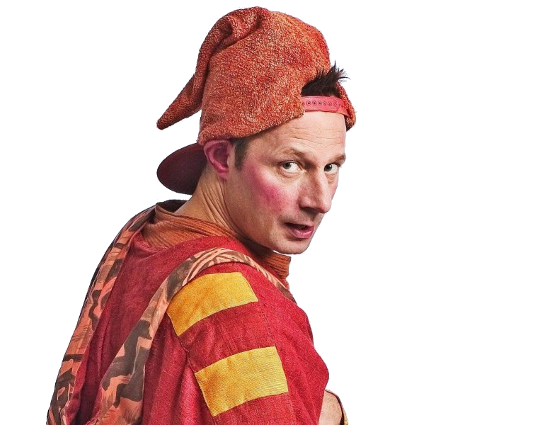
As you might be able to see from the drawing above, I imagine that Ponder Stibbons would probably settle for a pointy hat with a large pocket in front, complete with the traditional nerdy pocket protector and assortment of useful pens, whereas Adrian ‘Big Mad Drongo’ Turnipseed and his fellow student wizards would probably come up with something similar to the Pyrus cap (so they could wear it back to front):
*No relation to Funkfreed, although they probably sound quite similar when they go “doh do-doh”.
We have compiled a list of Sir Terry Pratchett’s best quotes to remember him by. A fantasy author and creator of the Discworld, Terry was known for his uncanny sense of humor and quirky fashion sense.
Actor, Sir Tony Robinson remembers Pratchett as a “bit of a contradiction. He was incredibly flamboyant with his black hat and urban cowboy clothes.”
He also added, “Everybody who reads his work would agree Death was one of his finest creations – Terry in some way has now shaken hands with one of his greatest-ever creations.”
Whereas Pillip Pullman described his writing as pure humor. He said: ”There is nothing spiteful, nothing bitter or sarcastic in his humour.”
Read Sir Terry Pratchett’s best quotes below:
“Evil begins when you begin to treat people as things.” — Terry Pratchett, I Shall Wear Midnight
“Light thinks it travels faster than anything but it is wrong. No matter how fast light travels, it finds the darkness has always got there first, and is waiting for it.” ― Terry Pratchett, Reaper Man
“The pen is mightier than the sword if the sword is very short, and the pen is very sharp.” ― Terry Pratchett
“The trouble with having an open mind, of course, is that people will insist on coming along and trying to put things in it.” ― Terry Pratchett, Diggers
“She was beautiful, but she was beautiful in the way a forest fire was beautiful: something to be admired from a distance, not up close.” — Terry Pratchett and Neil Gaiman, Good Omens: The Nice and Accurate Prophecies of Agnes Nutter, Witch


 Aw Yiss